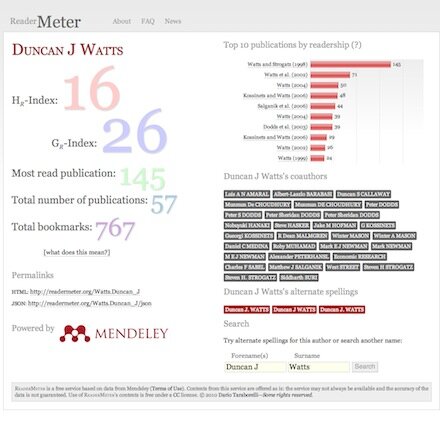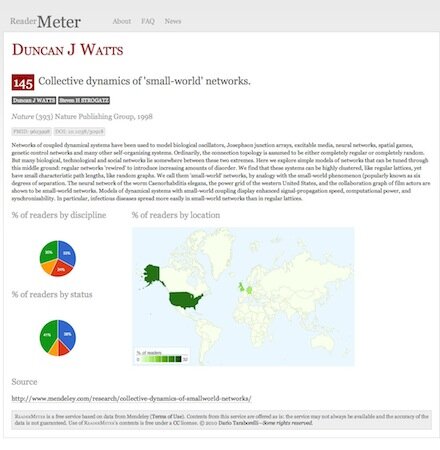
Nature (the journal) is pro-cognitive-enhancing drugs

December 11th, 2008 by jose

Nature has published a paper that advocates the use of cognitive-enhancing drugs: "Towards responsible use of cognitive-enhancing drugs by the healthy"

The comments on Nature’s opinion forum are varied, but in general people seems to be against:

"How dare they have the audacity to suggest such a thing?! The solution to the increasing “unnaturalness” in human society is not to simply shrug, say “why stop at homes, clothes, etc” as the authors suggest, and start drugging up otherwise healthy adults! "

As a scientist I do not relish my peers or younger colleagues taking such drugs for the extra edge in career success. I do not relish getting “confidential” advice from a tenure review committee member that next time I should try taking a daily dose of “X”.

We have talked about this before, and I thought that seeing such a strong, influential outlet taking positions on it (by publishing a paper; one could argue that the publisher doesn’t really need to share views with what it published, but still) is important enough to post.

Related posts:

Thinking on what you will do after retirement? Think again!

November 24th, 2008 by jose

If you are like most people in the academia, you place a lot of value on security and benefits. You also have great plans for that day when you retire and have time to… well, have a life :).

Jack Cheng has a superb post on how much you can expect to live and use that free time you have earned:

Picture an average American who decides to stop working at the age of 65. Got it? Now guess how many years he’ll have to enjoy his post-retirement before he passes away.

I’ve asked this to a bunch of friends and coworkers over the last two weeks. I’ve heard answers like “15-20 years” or at the very least, 10 years. But none of those is even close.

The actual answer? 18 months.

Scary. Being a workoholic doesn’t sound that good. Sorry to post this in a productivity blog :)

Related posts:

Ending Adolescence earlier and the obsession with productivity

November 13th, 2008 by jose
== Summary ==

Image via Wikipedia

BusinessWeek has an interesting post on how adolescence could be a failed social experiment and we should let 13-yo kids take adult-level responsibilities.

While the idea is good, I still find it troublesome in a society that works more than ever and has less spare time even when technology should provide abundance of resources otherwise.

The idea of rushing kids into adulthood does sound a bit like getting them to be productive as soon as possible. What happens then with those years where you experiment and test new things? While they may appreciate the new-found responsibility at first, long-term consequences of this decision are unpredictable. Will we have less creative people? I for one didn’t know what I wanted to do with my life at 13. If adolescence was a social experiment that enabled upper-class to take their kids out of sweat shops, then removing adolescence will land them into a new "intellectual sweat shop" environment. Take China for example. Kids (only kids!) are under a lot of pressure to be the very best at some specialized domain from very early in life. I would be surprised if this has no consequences. As Cal Newport wrote, there’s a general obsession with productivity that seems to be preying on our youngest. And then, the feared academic crisis.

So we translation from physical sweat shops to intellectual ones.  How is this better? We seem to bring our children into a world where most of us are time-poor, even though there is a (theoretical) abundance of resources since the industrial revolution.

Most people accept laughable payment for their time (that includes academics). So time is the scarce resource. During adolescence, we are granted an oasis of time -that in retrospective, may feel wasted-. Do we want to rush teenagers out of it?

Reblog this post [with Zemanta]

Related posts:

PhDcomics.com on the economy crisis

November 12th, 2008 by jose

phdcomic

Related posts:

Magnificent post of project management, and why Google does it right. More on why untested claims work

November 8th, 2008 by jose

Steve Yegge has an insightful post on the Agile programming methodology from the perspective of a googler. Why is this important to academic productivity? Well, most of the things he talks about are related to our previous conversations on why it’s hard to measure productivity, and why people buy into fads about it. For example:

How do we know it’s not more productive? Well, it’s a slippery problem. Observe that it must be a slippery problem, or it all would have been debunked fair and square by now. But it’s exceptionally difficult to measure software developer productivity, for all sorts of famous reasons. And it’s even harder to perform anything resembling a valid scientific experiment in software development. You can’t have the same team do the same project twice; a bunch of stuff changes the second time around. You can’t have 2 teams do the same project; it’s too hard to control all the variables, and it’s prohibitively expensive to try it in any case. The same team doing 2 different projects in a row isn’t an experiment either.

This is also true for academic productivity. So this leaves me in a conundrum. No matter how much we want to find a theory of productivity and test it empirically, nobody is going to seriously do it because it’s impractical. So we are doomed to have a ream of blogs (yes, like this one) talking about it.

Note that contrary to Steve’s case, where companies cover their failures instead of publishing them, we do have some public log of successful behavior (i.e., scientists do have a track record). We lack the (large?) set of things they tried and failed at to achieve their publication.

Well if you can’t do experiments and you can’t do proofs, there isn’t much science going on. That’s why it’s a slippery problem. It’s why fad diets are still enormously popular. People want fad diets to work, oh boy you bet they do, even I want them to work. And you can point to all these statistically meaningless anecdotes about how Joe lost 35 pounds on this one diet, and all those people who desperately want to be thinner will think "hey, it can’t hurt. I’ll give it a try."

This explains why Steve Pavlina gets so much attention. It aims directly for things that people want to believe work. No matter that testing the claims would be either impossible (falsability is good, remember?) or impractical. This kind of reasoning works for anything that is sold online with a long sales page that cites some spectacular successes and a few ‘testimonials’.

GTD is on that list too, by the way.

Surprised by how good the writing is in Steve Yegge’s posts? I am too, but don’t be. It looks people who have spent quality time on functional languages develop super-human writing skills. (note: I have only two observations here :) ).

Note: the post gives a lot of detail on how life is inside Google, and how an academic department may not be that far off. Food for thought.

Related posts:

“Writing style” vs. “content”: Watson & Crick’s example

November 5th, 2008 by jose
Figure 2. Diagramatic representation of the ke...

Image via Wikipedia

Recently I attended a scientific writing workshop by Rona Urau and Susannah Goss here at MPI, Berlin.

Plenty of interesting stuff that I’d like to share here. I was under the impression that style doesn’t matter all that much; but the workshop changed my mind. And there is a paper that uses Watson    and Crick’s famous Nature paper as an example of how much style matters. There was a key paper on the same ideas by Avery et al. that was completely eclipsed by the success of Watson    and Crick’s. The key difference? Style and rethoric.

Watson    and Crick  were  extremely  concise;  their paper is only about 900 words long. Avery  et  al.  were  verbose;  their paper  is  about  7,500  words  long. They also were persuasive and used first-person statements (Avery et al. used "the authors"). They stated the importance of their work on the first paragraph, while Avery et al. never made any claims about the importance of their work.

From Urau and Goss’ materials:

And any of you still wondering how attention to stylistic aspects can help get your work published may be interested in the following statistic: "Inadequate writing can slow or prevent publication of scientific research. According to an editor of Evolution for example, poor writing is almost as frequent a reason for rejecting a manuscript as is flawed experimental design or analysis; nearly 50% of rejected papers are so poorly written that reviewers and editors cannot understand the experimental design, analysis, or interpretation (Endler 1992). My informal survey of editors of other biological journals suggests that this percentage is typical." (Moore, R. [1994]. Writing as a tool for learning biology. BioScience 44, 613-617.)

References

Avery, O.T. , C.M. MacLeod, and M. McCarty.  1944.  Studies on the chemical nature of the substance inducing  transformation  of  pneumococcal  types.  Journal  of  Experimental  Medicine  79:  137-158. 

Watson,  J.D.  and  F.H.C.  Crick.    1953.    Molecular  structure  of  nucleic  acids:  a  structure for deoxyribose nucleic
acid.” Nature 171: 737-738.

Reblog this post [with Zemanta]

Related posts:

Pavlina’s book review: Personal Development for Smart People

October 24th, 2008 by jose

Summary: I didn’t like the book, and won’t go into detail here; instead I marvel at how many people read, believe and act on things that are completely unsubstantiated by any evidence. But that only shows my naivety: it seems that most of the world outside science -and some inside- works that way.

Who is Steve?

Steve Pavlina is a top-100 blogger and a personal development guru. He has done several impressive things like majoring in Math and CS in three semesters, trying polyphasic sleep for 6 months, and testing several extremely demanding changes on his habits like eating raw food only. 

In my view, the field of personal development feels scam-ridden. It preys on people who may not have the strongest will. So the title "Personal development for smart people" feels tonge-in-cheek (Oxymoron?). I’m sure many readers, with an empirical bias, may be bothered by all the new-agey chat out there that passes for advice (with no solid evidence backing it up). Now, is Steve different? Is this book better? The answers are no, and ‘maybe, I don’t know what else is out there’.

Problems with his method: Who in the academia should be doing Steve’s job?

One thing that bothers me is that Steve’s book uses no references whatsoever. He claims to have read most self-help books, but does not acknowledge any specific ideas from them. If all the ideas in the book are new and his, then I’m very impressed -I wouldn’t know-, but that seems unlikely. Again, I’m sure self-help books are all like that; making reference to other people’s ideas in a way you can track them down, as sensible as it sounds, remains a signature of the academia.

Read the rest of this entry »

Related posts:

The right tool for the job

October 17th, 2008 by james

Following my earlier post on using numbered folders to keep track of your projects, I received a couple emails from readers wondering what software I use to implement the system. As a quick recap, the idea was that you create a single projects folder and in that directory, every new project goes into its own sequentially numbered folder. Then – and here’s the key bit – you use a file of some sort to keep track of these ids and any associated meta-data (e.g. titles, status, todos).

In this post, I want to review the basic tools for storing key indexed data and the pros and cons of each technology. Being productive is largely about using the right tools for the job and the numbered folders problem is no different. So below I’ll review what I see as the four basic options and how they can be used generally and for the numbered folders technique.

Read the rest of this entry »

Related posts:

Thomson Research (EndNote) sues Zotero (!)

October 14th, 2008 by jose

This is spectacular. Do you want to see the claim?:

Thomson […] claims that Zotero is causing its commercial business "irrzotero-sm eparable harm" and is wilfully and intentionally destroying Thomson’s customer base. In particular, Thomson is demanding that GMU stop distributing the newer beta-version of Zotero that allegedly allows EndNote’s proprietary data format for storing journal citation styles to be converted into an open-standard format readable by Zotero and other software. Thomson claims that Zotero "reverse engineered or decompiled" not only the format, but also the EndNote software itself.

So, if a proprietary software gets an open source competitor that does beat it in many aspects, the best solution is suing it.

I’m an endNote user, mainly because I have already lots of text with endNote references. But endNote bothers me with new upgrades that are expensive, but add little. If you are a zotero user, I do hope you can help its authors to keep doing what they do: create outstanding software.

Related posts:

Mirror mirror on the wall, who’s the most productive of them all?

September 29th, 2008 by james

Creative Commons licensed from Flickr user yvesmoreaux

In my last post, I looked at how intended learning outcomes (ILOs) can help focus your work and improve your productivity. Specifically, we saw how ILOs can be written to mesh with longer term goals, clarifying your immediate priorities and guiding interim assessments. This post will consider the last point: how ILOs can contribute to evaluations of your productivity.

Read the rest of this entry »

Related posts:

Improving productivity with intended learning outcomes

September 22nd, 2008 by james

//www.flickr.com/photos/emzee/273289101/emzee/a)

"Well, it's round, apple-y and …"

It’s now September and with the turning of the leaves comes the start of another academic year. After more than 20 years of conditioning, I still see this as the true start of the new year so rather than wait until January, I tend to make my productivity resolutions now. But even if you prefer to wait until the snow flies, you’ll know that pausing to reflect on your past achievements and future goals is an important part of being productive.

I want to introduce the idea of intended learning outcomes (ILOs) as a template for planning your productivity. Planning is a key part of the Getting Things Done (GTD) system but it’s perhaps an overlooked one. I think part of this problem is that it can be difficult to coordinate plans over the various recommended time horizons: career, 5 years, this year, this week, etc. ILOs help overcome this obstacle by clearly defining what you hope to learn and over what period.

Read the rest of this entry »

Related posts:

Ubiquity: an interesting way to interact with a browser

September 18th, 2008 by jose

Just a quick note to mention Ubiquity. It can be ‘quicksilver for firefox’ but it goes a lot further I think. It takes a very refreshing view to repetitive tasks we all do and renders them obsolete. For example:

You’re writing an email to invite a friend to meet at a local San Francisco restaurant that neither of you has been to.  You’d like to include a map. Today, this involves the disjointed tasks of message 2851337837_652b1aca9ecomposition on a web-mail service, mapping the address on a map site, searching for reviews on the restaurant on a search engine, and finally copying all links into the message being composed.  This familiar sequence is an awful lot of clicking, typing, searching, copying, and pasting in order to do a very simple task.  And you haven’t even really sent a map or useful  reviews only links to them.

What I find impressive is the clarity of thought that could detect this as boring, repetitive and build a tool that obviates it. I’m not using Ubiquity (nor Firefox as my main browser) but this makes me consider switching.

Related posts:

Merlin Mann (43Folders) declares moral bankruptcy of the ‘productivity Pr0n’ cult

September 14th, 2008 by jose
Merlin Mann

Image via Wikipedia

In an impressive display on coherence, Merlin Mann (43Folders) declares moral bankruptcy of the ‘productivity Pr0n’ cult. This is something I have discussed before on ap.com (post: rethinking life hacks).

Merlin has declared he wants a new direction for 43Folders; it was harming people more than helping, since the time readers spent on the blog was taking them dangerously away from their goals. I like his new motto:

Ask yourself: Why am I here right now instead of making something cool on my own? What’s the barrier to me starting that right now?

Will Merlin succeed? Or will he be captured by the gravitational field of cheap self-help advice? We will have to wait until the next episode of 43Folders: the saga.

Related posts:

Tools for online academic collaboration?

September 11th, 2008 by shane

A reader writes:

“Dear Academic Productivity,

After having finished a phd project, I am starting a new research project together with a colleague. As a collaborative project requires, well, collaboration and coordination, I wonder if you or perhaps your readers happen to have any good advice, both on best practices and concrete suggestions for web-based collaboration tools.

Read the rest of this entry »

Related posts:

Is Google Chrome going to be the Firefox killer?

September 2nd, 2008 by dario

Google is going to release in the coming hours what looks like a revolutionary new entry in the browser arena: Google Chrome. The GUI design and engineering effort behind Google Chrome looks impressive. What is more, Chrome is going to be released under an open source license.

In spite of the sugary rhetoric (“it’s in our interest to make the internet better”– yeah, thanks Google), is this going to be the ultimate Firefox killer? And how will this affect the landscape of open source development altogether?

Related posts:

Happy Birthday AP.com!

September 1st, 2008 by dario

Precisely two years ago, Shane posted our first mission statement. Simple and ambitious as it was, that post pretty much sums up why we are still here.

Read the rest of this entry »

Related posts:

Using EndNote with LaTeX

September 1st, 2008 by james

For most academics, the standard reference management software is EndNote. It lets you keep track of all the journal articles, books, web sites, etc. that you have read and might want to cite in your papers, integrating easily with Microsoft Word to create properly formatted citations and bibliographies.

But what do you do if you use LaTeX not Word to write your papers? Traditionally BibTeX comes to rescue. It uses a formatted plain-text file to store references and with the custom-bib and natbib packages, creating citations and bibliographies is fairly painless. You can even use a graphical editor like JabRef to help manage your BibTeX database.

However there can be problems when collaborating with people who use Word. How do you share your BibTeX references with EndNote users or vice versa?

Read the rest of this entry »

Related posts:

The failure of open science

August 26th, 2008 by jose

Michael Nielsen has a great post on why open science is failing to take off. His main point is that science was never that open to start with, but thanks to the communication needs of the time and the technology available people developed the peer review system. A system that is now hauting us, while top scientists disregard current technology (mostly web-based) that makes the current system look silly.

By the way, Nielsen knows what he is talking about; he wrote the standard text on quantum computation the most highly cited physics publication of the last 25 years according to Google Scholar.

The first example he uses is Nature’s open peer review system:

Inspired by the success of amazon.com and similar sites, several organizations have created comment sites where scientists can share their opinions of scientific papers. Perhaps the best-known was Nature’s 2006 trial of open commentary on papers undergoing peer review at Nature. The trial was not a success. Nature’s final report terminating the trial explained: There was a significant level of expressed interest in open peer review… A small majority of those authors who did participate received comments, but typically very few, despite significant web traffic. Most comments were not technically substantive. Feedback suggests that there is a marked reluctance among researchers to offer open comments.

His second example is the usual suspect: wikipedia.

John Seigenthaler Sr. has described Wikipedia ...

Seigenthaler has described Wikipedia as "a flawed and irresponsible research tool".

Nielsen marvels as scientists missing the point of wikipedia:

[...] You’ve bought into the current game, and take it for granted that science is only about publishing in specialized scientific journals. But if you take a broader view, you believe science is about discovering how the world works, and sharing that understanding with the rest of humanity.

Read the rest of this entry »

Related posts:

Academics: What are the one or two biggest wastes of time?

August 15th, 2008 by jose

I think if we all put together a list, it’s going to be easy to identify these troublemakers and avoid them. Actually, a better question would be what are the activities that get the most bang for your time, but they may vary a lot from discipline to discipline. Straightforward application of Pareto’s principle should go a long way.

By the way, is any of you keeping any kind of log of where your time goes? Or running any application like rescueTime?

Related posts:

The non application of cognitive psychology to learning

August 15th, 2008 by shane

I was recently involved in a project where I needed to examine some research literature on learning and memory. In particular, I was investigating the spaced learning effect on memory. Memory research has been central to psychology for as long as  psychology has existed as an academic discipline, and the spacing effect (also known as distributed practice) has been studied for well over an hundred years. Studies of the spacing effect have shown that when you space learning over separate learning intervals, long term retention is normally much higher compared with the equivalent amount of training from a single or “massed” session. This effect is robust across different time scales, different kinds of learning, and is even true across different species. Another effect, not quite as well studied, is the testing effect. Repeated testing over time is also beneficial for learning, mainly because testing involves effortful memory retrieval, which is advantageous for the formation of long term memories.

Read the rest of this entry »

Related posts:

Related posts: